Ask a well-travelled wildlife enthusiast what the finest leopard viewing on earth looks like, and a remarkable number of them will say: Sri Lanka. The island has two national parks that make that claim credible, and they are completely unlike each other in character, in atmosphere, and in the kind of encounter they reliably deliver. Yala National Park and Wilpattu National Park are both legitimate answers to the question of where to see a wild leopard. The question of which one is right for you is more interesting than it sounds.
Yala National Park: The World’s Most Leopard-Dense Reserve
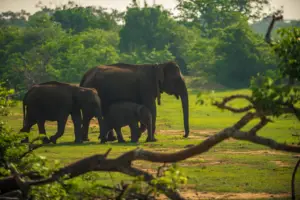
Yala’s Block 1 has the highest density of wild leopards of any protected area on earth. That single fact drives its international reputation, and the reputation is entirely justified. A well-timed morning safari in Yala regularly produces multiple leopard sightings within a single session, which is an outcome that most safari destinations on the planet cannot reliably offer at any price point. Beyond the headline act, the landscape is genuinely extraordinary: dry thorn forest giving way to open coastal lagoons and scrubland where the Indian Ocean is visible beyond the tree line. Large elephant herds gather at the lagoon margins throughout the morning. Sloth bears emerge from the rocky outcroppings at dawn. The birdlife, over 200 recorded species, makes the park exceptional on its own terms even without a large mammal sighting.
The main caveat is visitor numbers. Yala is Sri Lanka’s most visited national park, and peak season concentrations of vehicles around major sightings can dilute the experience for travellers who come specifically for the feeling of genuine wilderness. The solution is not to avoid Yala but to approach it correctly: a private vehicle rather than a shared jeep, a specialist naturalist who knows individual territory patterns rather than a general driver-guide, and a pre-dawn arrival at the gate that puts you in the park during the most productive hours before the vehicle numbers build.
Wilpattu National Park: Sri Lanka’s Wildest Safari
Wilpattu is Sri Lanka’s largest national park and its least-visited. Those two facts in combination produce something that is increasingly rare in international wildlife travel: a safari experience that feels genuinely wild because the infrastructure and the visitor numbers have not yet caught up with the quality of what is there.
The park is defined by its villus: natural, circular, water-filled clearings set into dense dry forest that concentrate wildlife for extended, unhurried observation without competition from other vehicles. Wilpattu’s leopard sightings have grown significantly more reliable in recent years as the population has expanded and adapted to vehicle presence, and the encounters here are qualitatively different from Yala’s. Longer, quieter, more intimate. A leopard fully at ease in its own landscape, observed from close range with no other vehicle in sight, has a different effect on the observer than the same animal viewed as part of a cluster of arriving jeeps. For travellers who have experienced both parks, Wilpattu frequently produces the deeper memory.
The sloth bear population at Wilpattu is strong and reliably encountered at the villu water margins. Elephants, crocodiles, and a rich endemic bird community make every day in the park productive across multiple wildlife categories simultaneously.
The Key Differences
Yala delivers higher frequency of leopard sightings and a greater concentration of wildlife in a smaller area, in a landscape whose coastal edge and open lagoon character makes it visually extraordinary. Wilpattu delivers longer, more intimate, less crowded encounters in a forest landscape that feels genuinely untouched, with the particular atmosphere that comes from being in a park where the animals have not had to become accustomed to large numbers of vehicles.
Safari Timing: When to Go to Each Park
Yala is open from mid-October through September each year, with the dry season from May through August producing the most concentrated wildlife activity around the permanent water sources. Wilpattu operates year-round, with the October-to-April window coinciding with optimal conditions in both parks simultaneously. The leopard activity at both parks is most reliable in the two hours after gate opening at dawn: this is non-negotiable, and any safari itinerary that does not prioritise this window is making a significant avoidable compromise.
Our Recommendation
If you can only visit one park, Yala delivers more reliable sightings in more spectacular scenery with better accommodation options immediately adjacent. If you have time for both, the combination is the most complete wildlife experience Sri Lanka offers: Yala’s frequency and visual drama paired with Wilpattu’s intimacy and genuine wildness. Ceylon Travel Escapes designs safari itineraries for both parks, with specialist naturalists, private jeeps, and lodge selections made specifically for the quality of the safari access they provide.
Ready to plan your Sri Lanka safari? Contact Ceylon Travel Escapes to begin designing your wildlife journey.